Why Color Matters at Indian Weddings
Indian weddings are known for their vibrant decorations, beautiful fabrics, and joyful atmosphere. Guests often wear colorful outfits that match the celebratory spirit of the event.
Unlike many Western weddings where guests tend to wear darker or more neutral colors, Indian weddings encourage bright, expressive shades that reflect happiness and cultural tradition.
When choosing your outfit, the goal is usually to look festive and elegant while avoiding colors that might feel too casual or muted for the celebration.
Popular Saree Colors for Wedding Guests
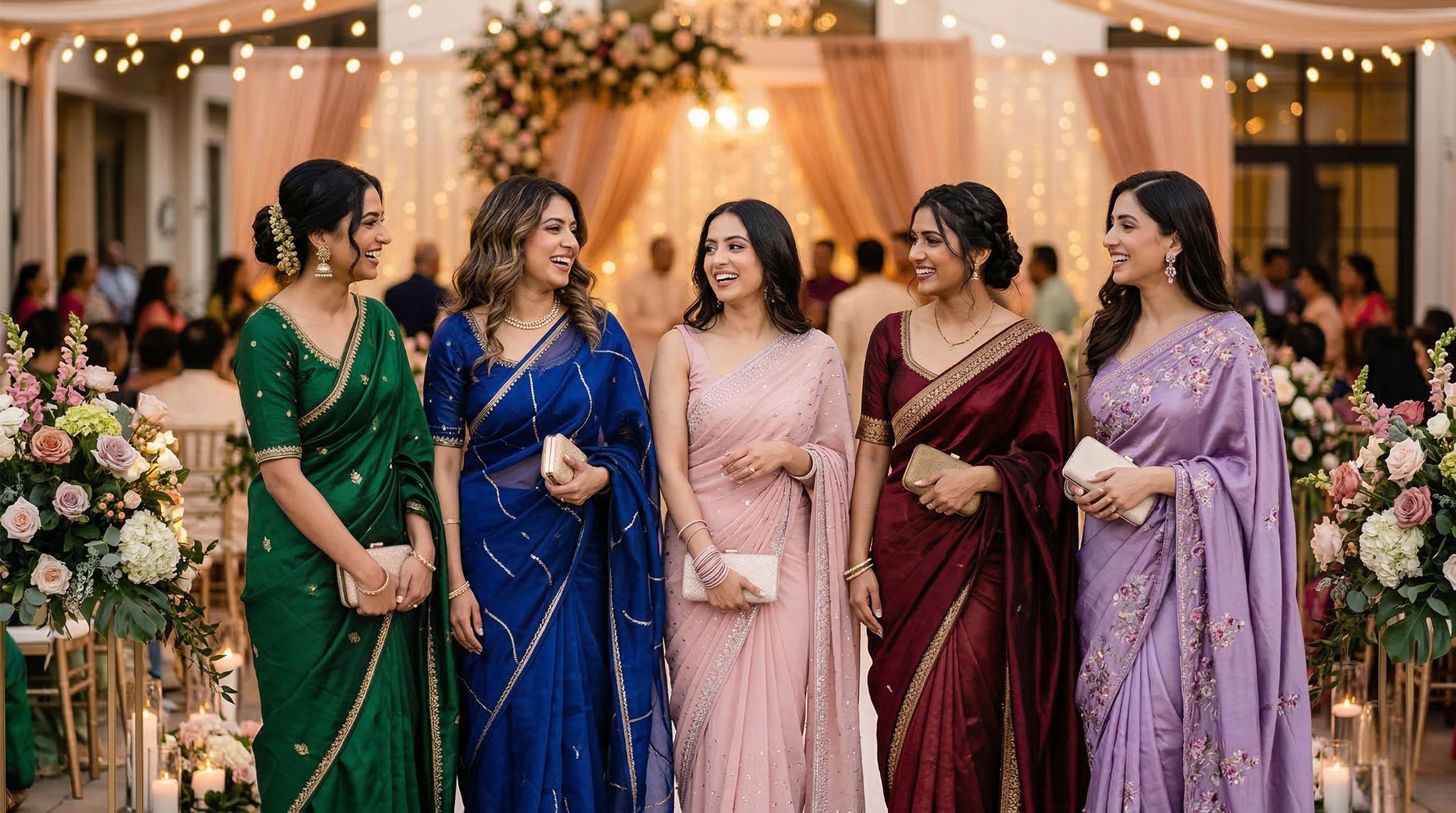
Certain saree colors are especially popular for wedding guests because they feel festive, elegant, and photograph beautifully in wedding settings.
Pink
Pink is one of the most classic wedding guest colors. From soft blush to vibrant fuchsia, pink sarees feel joyful and timeless.
Emerald Green
Emerald green feels rich and luxurious, making it a beautiful option for ceremonies, receptions, and evening celebrations.
Royal Blue
Royal blue sarees feel elegant and sophisticated, especially for formal receptions and evening wedding events.
Maroon
Maroon is a deep, traditional shade often worn at weddings. It offers a refined look while still feeling festive.
Gold
Gold accents or gold-toned sarees create a glamorous wedding look that works beautifully for receptions.
Lavender
Lavender and soft purple tones have become increasingly popular for daytime weddings and modern celebrations.
Best Saree Colors for Day vs Evening Weddings
Daytime Wedding Colors
For daytime ceremonies or outdoor events, lighter and brighter colors tend to feel especially appropriate. Pastels, coral tones, peach shades, and soft pinks can create a fresh and elegant look.
Evening Reception Colors
Evening events often feel more glamorous, so deeper jewel tones and metallic details work beautifully. Rich colors like emerald, navy, maroon, and gold can feel especially elegant for nighttime celebrations.
Colors Guests Should Avoid
While Indian weddings are colorful and expressive, there are still a few color choices guests may want to approach carefully.
For example, wearing bright red may be avoided at some weddings because it is traditionally associated with bridal attire. However, customs vary depending on the region and the couple's preferences.
Very casual colors or extremely muted tones may also feel less festive compared to the vibrant atmosphere of most Indian weddings.
Choosing a Color That Matches the Event
When selecting a saree color, it can help to consider the overall tone of the wedding celebration.
For example:
- Sangeet events often feature bright, energetic colors.
- Wedding ceremonies may include elegant jewel tones.
- Receptions can be glamorous and dramatic with deeper shades.
If you want something elegant and easy to wear, many guests choose a ready-to-wear saree that already includes thoughtful color combinations and beautiful detailing.
Coordinating Colors with Accessories
Accessories can transform the look of your saree. Jewelry, clutches, belts, and blouses can all complement your color choice.
For example, gold jewelry pairs beautifully with jewel-toned sarees, while silver accents can enhance cooler tones like lavender or blue.
You can also explore styling pieces like belts, capes, and shapewear in the Saree Essentials collection to complete your outfit.